
Do You Need to Book All your Gîtes on the Via Podiensis? The Honest Answer

One of the most common questions we see in our Camino Le Puy Facebook group is:
"Do I need to book my gîtes in advance on the Via Podiensis?"
The short answer is:
Usually yes—but probably not as much as you think.
The longer answer depends on when you're walking, what type of accommodation you prefer, how flexible you are, and what kind of Camino experience you're hoping to have.
After more than a decade of helping pilgrims prepare for the Via Podiensis (GR65), we've found that there is no single booking strategy that works for everyone.

The Via Podiensis Is Not the Camino Francés
Many pilgrims arrive in France having read books or blogs about the Camino Francés in Spain.
On the Camino Francés, it is common for pilgrims to leave in the morning without knowing exactly where they'll sleep that night.
The Via Podiensis is different.
Not better.
Not worse.
Just different.
There are several reasons why reservations are more common on the French Camino.
Gîtes Are Smaller
The Via Podiensis passes through small villages and rural communities where accommodation is often limited.
A private gîte may only accommodate 8 to 10 pilgrims.
Even municipal gîtes often have fewer than 20 beds.
When those places are full, there may not be another option just down the road.
The Route Is More Rural
One of the great joys of the Via Podiensis is that it crosses some of the most beautiful and remote regions of France.
The trade-off is that accommodation can be more spread out than on some Spanish routes.

French Hosts Are Also Preparing Dinner
Many gîtes offer demi-pension, which includes:
Dinner
Bed
Breakfast
Your host isn't simply making beds.
They're also shopping, cooking, and preparing a meal for everyone sitting around the table that evening.
Knowing how many pilgrims are arriving helps them plan food, seating, and service.
For this reason, booking a day or two ahead is generally appreciated and considered good practice.

What We Are Seeing on the Via Podiensis Today
The Via Podiensis has become increasingly popular in recent years.
May and September remain the busiest months, but we've also noticed the route becoming significantly busier from mid-April onwards.
The good news is that more gîtes continue to open along the route, helping accommodate the growing number of pilgrims.
Despite the increase in popularity, most pilgrims still find accommodation without major difficulty.
The key is understanding what type of pilgrim you are.

The More Requirements You Have, the More You Should Book
This is probably the most important principle on the Via Podiensis.
If your only requirement is "a bed somewhere tonight," you have many options.
If your requirements are more specific, your options become narrower.
You may want:
Private rooms
Demi-pension every night
Specific gîtes you've heard about
A precise daily itinerary
Certain stage lengths
Particular villages
Accommodation with English-speaking hosts
The more requirements you have, the further ahead you should book.
How Far Ahead Do You Need To Book Gîtes on the Via Podiensis?
After years of helping pilgrims prepare for the route, this is generally what we recommend.
Before Leaving Home
Book your first 3 to 5 nights.
This removes much of the stress associated with arrival and allows you to settle into the rhythm of the Camino.
You'll arrive knowing where you're sleeping and can focus on enjoying those exciting first days on the trail.
Once You Are Walking
Book approximately 2 to 3 nights ahead.
This provides a balance between security and flexibility.
You'll know where you're sleeping in the near future while still allowing your Camino to unfold naturally.

Why We Don't Usually Recommend Booking Your Entire Camino
Increasingly, we are seeing pilgrims reserve their entire Camino before they leave home.
For some people, this works well.
However, it can also remove much of the flexibility that makes the Camino special.
Many things can happen during a pilgrimage.
You may:
Meet people you'd like to walk with
Need a shorter day because of fatigue
Feel stronger than expected and walk further
Discover a village you'd like to spend more time exploring
Change your plans entirely
The Camino rarely unfolds exactly as expected.
A fully booked itinerary can sometimes make adapting more difficult.
When Booking Further Ahead Makes Sense
There are situations where booking further ahead is a good idea.
You're Walking in May or September
These remain the busiest months on the Via Podiensis.
Popular accommodation can fill quickly.
You Want Private Rooms
Private rooms are limited and are often the first accommodation option to sell out.
You Have a Fixed Schedule
If you need to finish by a specific date, greater planning may help reduce stress.
There Are Particular Gîtes You Don't Want to Miss
Some gîtes become favourites among pilgrims.
If staying in a particular place is important to you, reserve it early.
What About the Célé Valley and Rocamadour Variants?
The variants deserve special consideration.
Accommodation is generally more limited than on the main GR65.
In addition, these areas attract tourists and holidaymakers who are not walking the Camino.
Competition for accommodation can therefore be greater.
For this reason, we generally recommend booking further ahead when walking either the Célé Valley or Rocamadour variant.

How Rob's Guide Can Help
One reason many pilgrims feel comfortable booking only a few days ahead is that they know what accommodation options lie ahead.
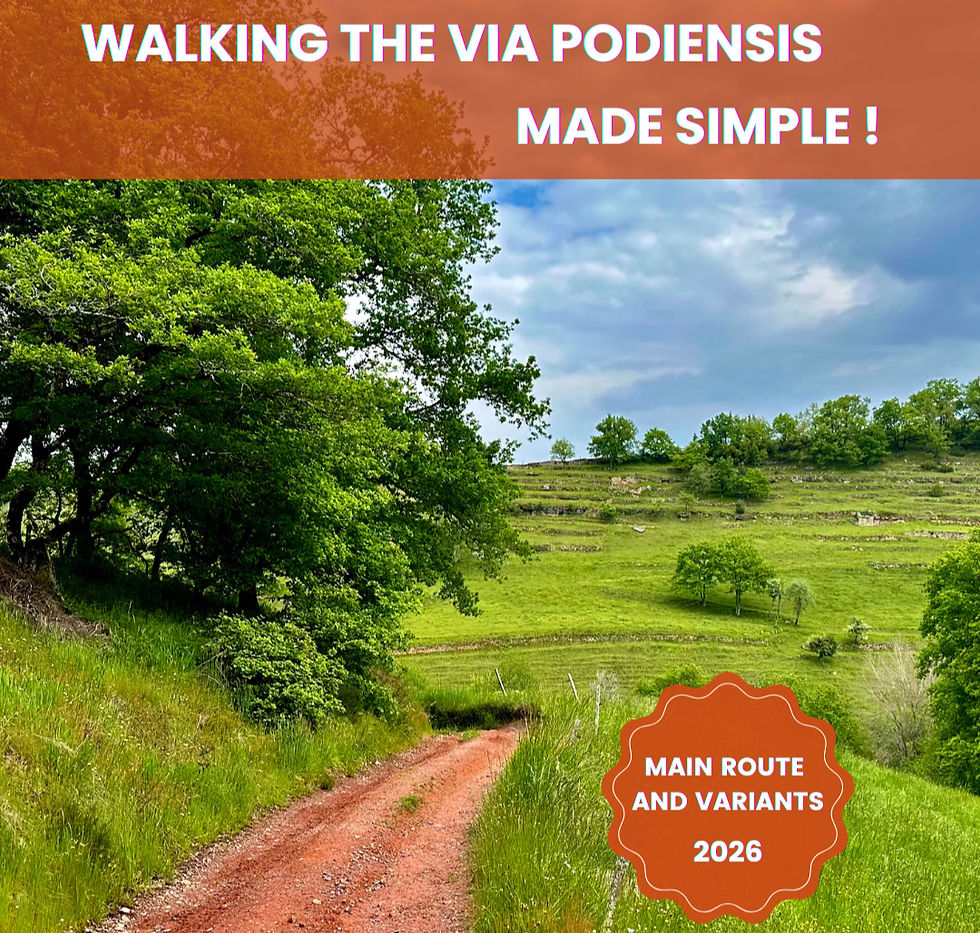
Rob's Walking the Via Podiensis Made Simple guide includes detailed accommodation information for every stage, making it easy to see where you can stop, what alternatives are available, and where you may want to book ahead.
Having that information at your fingertips allows you to remain flexible while still feeling confident about where you'll sleep.
Can You Walk the Via Podiensis Without Booking?
Some pilgrims do.
Many successfully find accommodation as they go.
However, even if you enjoy spontaneity, booking one or two days ahead remains a sensible approach.
It helps your hosts prepare for your arrival and reduces the chance of unpleasant surprises at the end of a long walking day.
The Honest Answer
So, do you need to book your gîtes on the Via Podiensis?
Usually, yes.
Do you need to book every night before leaving home?
Usually, no.
For most pilgrims, the sweet spot lies somewhere in between:
Book your first few nights.
Reserve accommodation a few days ahead as you walk.
Keep enough flexibility to adapt.
Book further ahead if you want private rooms, specific gîtes, or are walking the variants.
And leave room for the unexpected.
Because some of the best moments on the Via Podiensis happen when the Camino gently changes your plans.
About the Author

Kate Forrester is a long-time Camino pilgrim and co-administrator of the Camino Le Puy (GR65–Via Podiensis) Facebook community. Together with her husband Rob, she has spent more than a decade helping pilgrims prepare for and walk the Via Podiensis. Through their guides, resources, and online community, they have supported thousands of walkers on their journey from Le Puy-en-Velay to Saint-Jean-Pied-de-Port.

Comments