
Walking the Via Podiensis (GR65): A Complete Overview of the Le Puy Route


From Le Puy-en-Velay to Saint-Jean-Pied-de-Port:
what to expect,
how to prepare,
and how to make the most of this remarkable 750 km walk across France.
Some journeys begin long before we take the first step.
Perhaps you've seen photographs of pilgrims crossing the Aubrac plateau, heard someone describe the medieval village of Conques, or found yourself looking at a map of France and wondering what it would be like to walk all the way from Le Puy-en-Velay to Saint-Jean-Pied-de-Port.
The Via Podiensis, also known as the Le Puy Route or GR65, is one of Europe's great long-distance pilgrimage routes. It takes you through an extraordinary variety of landscapes, from volcanic hills and high plateaux to river valleys, medieval villages and the rolling countryside of south-western France.
But it's much more than a beautiful walk. It's an opportunity to experience rural French life at walking pace, discover places you might otherwise never visit and enjoy the particular rhythm that develops when your days become wonderfully simple.
If you're thinking about walking the Via Podiensis, you'll probably have plenty of questions. How difficult is it? How long does it take? Where will you sleep? How much should you budget? And how much planning do you really need to do?
We've brought together the questions we hear most often, along with practical advice drawn from our experience of the route, to help you begin.
Contents
1. What is the Via Podiensis?
The Via Podiensis is a historic pilgrimage route across south-western France, traditionally associated with the journeys of pilgrims travelling towards Santiago de Compostela in Spain.
Its name comes from Podium, the Latin name associated with Le Puy-en-Velay, where the route begins.
You'll encounter several names for the same journey: the Via Podiensis, Le Chemin du Puy, the Le Puy Route and the GR65. The GR65 is the French long-distance walking trail that follows much of this historic pilgrimage corridor.
Today, people walk the route for many different reasons. Some are drawn by its religious or spiritual heritage, others by the landscapes, history, culture or simple pleasure of travelling on foot.
Whatever brings you to the starting point, you'll be following a path that has welcomed travellers for centuries.
2. Where does the Via Podiensis begin and end?
The traditional starting point is Le Puy-en-Velay, a remarkable town in France's Haute-Loire department, known for its volcanic setting, historic buildings and cathedral.
Many pilgrims begin their journey at the Cathedral of Notre-Dame du Puy, where a pilgrim blessing is traditionally offered. It's a memorable place to start, whether or not you're walking for religious reasons.
From Le Puy, the route travels approximately 750 kilometres towards Saint-Jean-Pied-de-Port, close to the Spanish border.
Along the way, it crosses several distinct regions, including the Margeride, Aubrac, Lot valley, Quercy and Gascony.
Saint-Jean-Pied-de-Port marks the end of the Via Podiensis and, for many English-speaking pilgrims, the familiar starting point of the Camino Francés towards Santiago de Compostela.
Of course, you don't have to walk the entire distance in one journey. Many people choose to explore the route in shorter sections, returning over several years to continue where they left off.

3. How long does it take to walk the Via Podiensis?
Most people walking the entire Via Podiensis allow approximately five weeks, although the time required depends on their preferred daily distances, fitness, rest days and walking style.
Many itineraries divide the route into roughly 30–35 walking days, but there's no reason to follow a fixed schedule if it doesn't suit you.
To give you an idea, here's how different average daily distances translate into walking days over 750 kilometres:
Average distance per day | Walking days |
15 km | 50 |
20 km | 38 |
25 km | 30 |
30 km | 25 |
These figures exclude rest days and travel to and from the route.
One of the great advantages of the Via Podiensis is that you can organise your days around your own preferences. Some walkers enjoy covering longer distances, while others prefer shorter days with more time to explore villages, visit churches or simply linger over lunch.
There's also something rather special about walking the entire route continuously.
As the days pass, the concerns and routines of everyday life gradually begin to recede. You become absorbed in the simple rhythm of walking, eating, resting and setting off again. The world of the Camino becomes the world you inhabit, rather than somewhere you're visiting.
That doesn't make shorter journeys any less worthwhile. A week or two on the Via Podiensis can be deeply rewarding, and walking the route in sections offers the pleasure of returning to familiar territory while discovering somewhere new.
What matters is finding a rhythm that allows you to enjoy the journey.
4. How difficult is the Via Podiensis?
The Via Podiensis is a challenging but manageable long-distance walk for people who arrive with reasonable fitness and have prepared for consecutive days on their feet.
It isn't technically difficult in the sense of requiring mountaineering skills, but it does involve considerable changes in elevation, uneven paths and some demanding climbs and descents.
The early stages from Le Puy-en-Velay take you through hilly terrain before reaching the Margeride and the Aubrac plateau. The Aubrac is particularly memorable for its wide-open landscapes, but its exposed position can also mean strong winds, rain and sudden changes in temperature.
The descent towards Conques and the climb out again are among the sections that many pilgrims remember particularly well!
Farther west, the Lot valley and Quercy bring their own hills and valleys, while Gascony offers gentler-looking countryside that can nevertheless be tiring, especially during hot weather.
Perhaps the greatest challenge isn't any single climb but the cumulative effect of walking day after day.
Your feet, knees, shoulders and energy levels all need time to adjust. Comfortable footwear, a manageable backpack and some training before departure can make an enormous difference.
If possible, practise walking on consecutive days, including hills, while carrying the equipment you intend to take.
And remember that there's no prize for arriving exhausted. Shortening a day or taking a rest when you need one is simply part of looking after yourself.
Spring landscapes along the Via Podiensis. Rocky paths and misty conditions make for challenging walking. A peaceful woodland path marked with the familiar red-and-white GR65 waymarks.
5. When is the best time to walk the Via Podiensis?
For many pilgrims, May, June and September offer an appealing combination of temperatures, daylight and available accommodation.
However, the best time for you will depend on your preferences and how comfortable you are walking in different weather conditions.
Spring: April and May
April has become noticeably more popular among the pilgrims we've encountered in recent years, although we don't have figures to establish the size of that increase.
It's also a month when the weather can be particularly unpredictable. Snow is still possible on the Aubrac, and cold rain, strong winds and low temperatures can make walking uncomfortable. Some accommodation may not yet have opened for the season.
May brings longer days, fresh green landscapes and spring flowers, but it's worth paying attention to French public holidays, including 1 May, 8 May, Ascension and Pentecost. These can increase demand for accommodation, particularly around long weekends.
Early summer: June
June is a lovely time to walk, with long days, generally green countryside and plenty of opportunities to enjoy the outdoors.
Temperatures can still vary considerably, particularly at higher elevations, so don't leave your warmer layers behind.
High summer: July and August
Summer brings longer daylight hours but can also mean significant heat, especially in the lower and more exposed parts of the route.
Early starts, adequate water and sensible breaks become particularly important.
Autumn: September and October
September can offer very pleasant walking conditions, although warm days, rain and colder mornings are all possible.
By October, the days are shorter, temperatures may fall and some seasonal accommodation begins to close.
Winter walking requires more careful preparation because of weather, limited daylight and reduced accommodation availability.
If you're walking the full route, remember that you'll be crossing several different climatic areas over a period of weeks. The conditions you encounter at the beginning may be quite different from those farther along.

6. Where to stay on the Via Podiensis: accommodation and booking ahead
One of the pleasures of the Via Podiensis is the variety of places where you can stay.
The most characteristic accommodation is the gîte d'étape, which caters to walkers and pilgrims. Gîtes often provide shared sleeping arrangements, communal facilities and sometimes an evening meal.
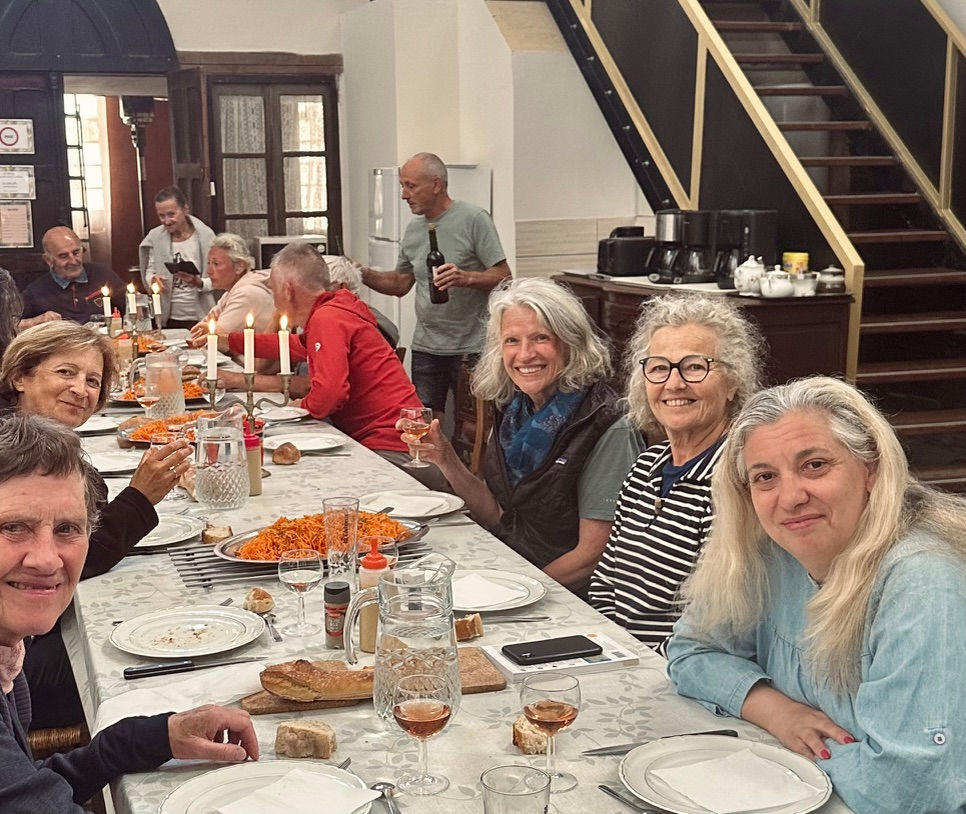
Many offer demi-pension (half-board), usually combining accommodation, dinner and breakfast. Sharing a meal around a communal table can become one of the most enjoyable parts of the day.
You'll also find chambres d'hôtes (bed-and-breakfast accommodation), small hotels, auberges and, in some places, municipal or religious accommodation and camping facilities.
How much does accommodation cost?
As an initial guide, you might allow:
Accommodation type | Indicative nightly price |
Gîte d'étape | €15–25 per person |
Chambre d'hôtes | €40–100 |
Hotel | €60–120+ |
Camping | €10–30 per pitch |
These are broad planning estimates rather than verified 2027 tariffs. Private-room prices depend on the property and occupancy, while meals may cost extra.
Do you need to book accommodation in advance?
There's no single answer.
Some pilgrims prefer to book every night before leaving home. Others enjoy deciding where to stop as they walk, making reservations only a day or two ahead.
Both approaches can work, but the time of year, local holidays, group sizes and availability of accommodation make a difference.
In smaller villages, there may be only one or two places to stay. If you're heading towards an area with limited accommodation, it's sensible to check availability before setting off.
We generally favour looking two or three days ahead, while keeping as much flexibility as circumstances allow.
And if your plans change, remember to cancel any reservations you no longer need. It's a simple courtesy to your hosts and to other pilgrims looking for a bed.
For a more detailed discussion, read our article Do You Need to Book All Your Gîtes on the Via Podiensis? The Honest Answer.
7. How much does it cost to walk the Via Podiensis?
The cost of walking the Via Podiensis depends largely on your accommodation choices, eating habits and preferred level of comfort.
France can be more expensive than Spain for pilgrims, particularly when it comes to accommodation and meals, but there are plenty of ways to manage your spending.
For someone staying mainly in shared gîtes, buying picnic lunches and enjoying prepared evening meals, a budget of around €50 per person per day can be achievable, although spending may be higher depending on your accommodation and food choices.
All prices in this article are estimates for planning purposes, not guaranteed rates. Actual costs will vary.
Here's an illustrative breakdown:
Expense | Estimated daily cost |
Gîte accommodation | €15–25 |
Breakfast | €5–8 |
Lunch or picnic | €8–12 |
Evening meal | €15–25 |
Coffee, snacks and extras | €5–10 |
Total | €48–80 |
These are estimates for planning, not confirmed 2027 prices.
What might the whole journey cost?
For a journey lasting 35 days:
Average daily spending | 35-day total |
€50 | €1,750 |
€60 | €2,100 |
€70 | €2,450 |
€80 | €2,800 |
These figures exclude travel to and from the route, equipment, insurance and any additional days.
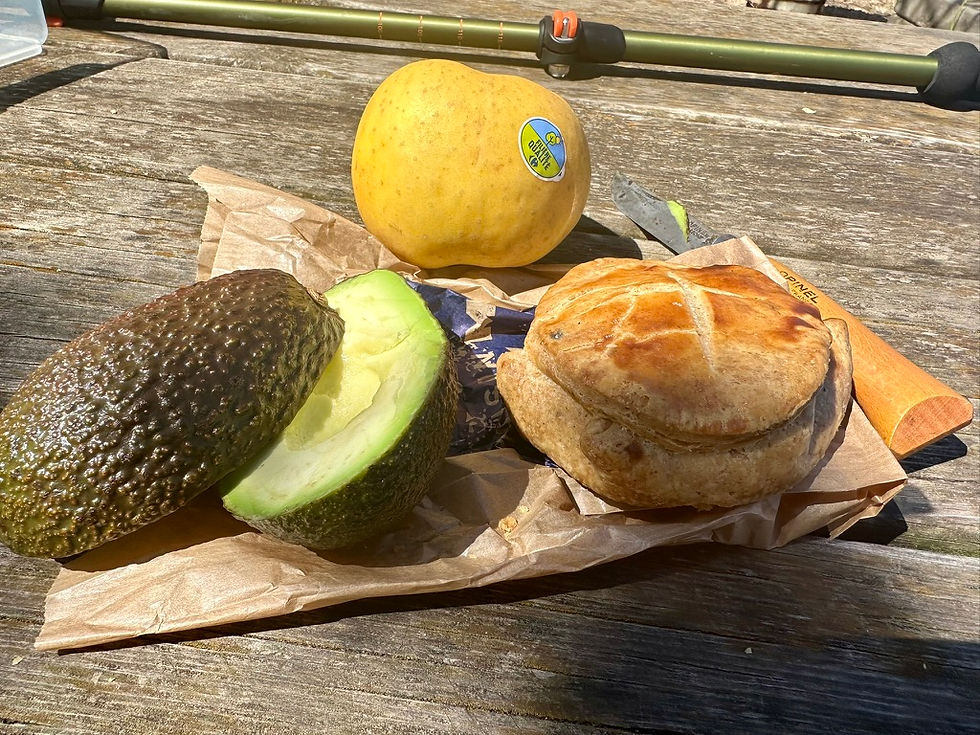
Food is one of the great pleasures of walking through France. A visit to the boulangerie, a picnic of bread and cheese, a local speciality discovered in a village shop or a convivial dinner at a gîte can all become memorable parts of the journey.
However, don't assume that every village has a bakery, shop or café. Opening hours can be limited, particularly on Sundays, Mondays and public holidays.
A little knowledge of what lies ahead can help you plan your meals, avoid carrying unnecessary supplies and keep your spending under control.
It's also sensible to allow something extra for the occasional private room, restaurant meal, taxi or unexpected expense.
8. Do you need to speak French to walk the Via Podiensis?
No, you don't need to speak fluent French to walk the Via Podiensis. Many international pilgrims complete the route with only a handful of French words and expressions.
But learning a little of the language before you leave can make a remarkable difference to your experience.
The route passes through rural parts of France where you shouldn't assume everyone speaks English. Some gîte owners are accustomed to international visitors and speak several languages; others speak only French.
A friendly Bonjour, a polite S'il vous plaît or a sincere Merci beaucoup can go a long way. And in France, greeting people when entering a shop, bakery or café is an important everyday courtesy.
A little French can open doors
Knowing how to ask for accommodation, order a meal, enquire about opening hours or explain a problem will make everyday situations easier.
But there's another reason to learn some French.
The Via Podiensis offers wonderful opportunities to meet people who live along the route. Gîte owners, farmers, shopkeepers and villagers all have their own stories, and even a simple exchange can become a memorable part of your journey.
You don't need complicated grammar to begin these conversations.
It's also worth becoming familiar with how French actually sounds when spoken naturally. The language you hear in a village café may sound quite different from carefully pronounced textbook sentences.
And remember that understanding a reply is just as important as knowing how to ask the question!
French for the Camino
I'm Kate, and as a Frenchwoman who has walked the Camino, I know how much richer the experience can be when you're able to communicate with the people you meet.
That's why I created French for the Camino, a practical course built around the conversations pilgrims are likely to have in gîtes, cafés, shops and other places along the route.
You don't need to become fluent before setting off. But a little preparation can help you feel more confident and make those everyday encounters all the more enjoyable.
9. What should you pack for the Via Podiensis?
One of the pleasures of walking the Via Podiensis is discovering how little you really need.
Everything you carry has to earn its place in your backpack, particularly if you're walking for several weeks.
A lighter pack generally makes walking more comfortable, but there's no magic weight that works for everyone. What matters is choosing equipment that suits your needs and the conditions you're likely to encounter.
Before leaving, try walking several times with your fully loaded backpack.
The essentials
For most pilgrims, a sensible packing list includes:
Comfortable, well-tested walking shoes or boots
A lightweight backpack that fits properly
Waterproof clothing and layers for changing temperatures
A sleeping-bag liner for gîte accommodation
Water bottles or a hydration system
A small first-aid kit and personal medication
Sun protection, including a hat and sunscreen
A phone, charger, identification and payment cards
Walking poles can also be useful, particularly on steep or uneven terrain.
What about luggage transfers?
If carrying a full backpack isn't practical or comfortable for you, luggage-transfer services are available along parts of the Via Podiensis.
These allow you to walk with a smaller daypack while your main bag is transported to your next accommodation.
Allow approximately €10 per bag, per transfer, and plan around a 13 kg maximum weight. These are indicative figures; prices, weight limits and availability may vary between providers, so check the conditions before booking.
Pack for changing conditions
The weather on the Aubrac plateau can be very different from the conditions you'll experience in the Lot valley or Gascony.
Even in late spring or early autumn, mornings can be cold, while summer afternoons may be very hot.
Aim for versatile clothing that can be layered and dries reasonably quickly.
And remember that although you're walking through inhabited countryside, some villages have very limited services. Knowing where you can buy supplies is more useful than carrying everything you might possibly need.

10. How do you find your way along the Via Podiensis?
One of the reassuring things about the Via Podiensis is that the route is generally well marked.
For much of the journey, you'll follow the GR65, identified by the familiar red-and-white markings of France's long-distance walking trails.
You'll find them painted on trees, rocks, walls and posts, helping guide you through forests, villages, farmland and open countryside.
Occasionally, however, a marking may be obscured, faded or simply missed at a junction. Towns can be particularly confusing, and temporary diversions or alternative routes sometimes require extra attention.
Do you need a navigation app?
In our experience, there's very little need for a navigation app on the Via Podiensis. The GR65 is so well marked that, for the vast majority of the route, you can simply follow the familiar red-and-white waymarks.
Of course, it's possible to miss a turning occasionally, particularly when passing through a town or village. For additional reassurance, Rob's Walking the Via Podiensis Made Simple guide includes GPX tracks that you can use whenever you need to check your position.
But there's something else worth considering. We spend so much of our everyday lives looking at screens, checking messages and relying on devices to tell us what to do next. Walking the Via Podiensis offers a rare opportunity to step away from all that.
To look up rather than down. To notice the changing light, the sounds of the countryside, the people we pass and the little things that might otherwise escape our attention.
There's a particular pleasure in simply following the waymarks and allowing yourself to become absorbed in the experience, without feeling the need to consult a screen at every turn.
Understanding what's ahead
Finding the next waymark is one thing. Knowing what lies ahead is another.
How far is it to the next village? Is there a long climb after lunch? Will you find a shop before reaching your accommodation? Are there several possible places to stop?
These are the questions that can make a real difference to how comfortably and confidently you organise your days.
Rob's Walking the Via Podiensis Made Simple guide is designed to help with precisely this kind of planning.
Rather than prescribing a fixed daily itinerary, it brings together maps, elevation profiles, distances, accommodation and practical information so you can see what's coming over the next two or three days and decide how you'd like to proceed.
Plan as much—or as little—as you like.
11. Walking the Via Podiensis alone or with others
One of the questions people often ask before setting off is whether they'll feel lonely walking the Via Podiensis on their own.
Walking alone doesn't necessarily mean being alone.
Although the route is generally quieter than the Camino Francés in Spain, there are opportunities to meet fellow pilgrims, particularly during the more popular walking months.
The pleasure of walking alone
Walking on your own gives you a particular kind of freedom.
You can start when you feel ready, stop when something catches your attention, change your plans or spend an afternoon exploring a village without having to negotiate with anyone else.
There may be days when you walk for hours without much conversation and others when you find yourself sharing the path with someone whose company you enjoy.
For many pilgrims, this balance between solitude and companionship becomes one of the most rewarding aspects of the journey.
Finding companionship along the way
Gîtes are often where friendships begin.
Shared dinners, conversations over breakfast and encounters with familiar faces in villages create a sense of community that develops naturally as you walk.
You may meet the same people several days in a row, even if you're not walking at exactly the same pace.
Sometimes a brief conversation turns into several days of walking together. At other times, paths separate just as naturally.
Walking as a couple or with friends
Walking with someone you know brings its own pleasures, but it can also require flexibility.
You may have different walking speeds, energy levels or ideas about when to stop.
There's no reason you have to spend every minute together. Some couples and friends walk separately for part of the day and meet again at their accommodation.
What matters is finding a rhythm that works for everyone.
A community beyond the walk
Many pilgrims stay in touch with people they've met or enjoy helping others prepare for their own journeys.
Our Facebook group, Camino – Via Podiensis – GR65 – Chemin du Puy-en-Velay, brings together people who've walked the route, those currently walking it and others who are still dreaming or planning.
It's a welcoming place to exchange experiences, ask questions and learn from people who know the route.
12. What makes the Via Podiensis so special?
There are many beautiful long-distance walks in Europe, but the Via Podiensis has a character all its own.
Part of its appeal lies in the extraordinary variety of landscapes it crosses. But there's something else too: the feeling of travelling slowly through a part of France that still follows the rhythms of rural life.
Landscapes that keep changing
The journey begins among the volcanic landscapes of the Velay, before crossing the Margeride and reaching the wide-open expanses of the Aubrac plateau.
From there, the route descends towards the Lot valley and Conques, one of the most memorable villages on the journey.
Farther west, the scenery changes again as you pass through the Quercy and eventually into the rolling countryside of Gascony.
These transitions are gradual. You begin to notice changes in the architecture, vegetation, food and even the accents of the people you meet.
Walking the entire route allows you to experience these changes in a way that travelling by car or train rarely does.
Villages, churches and centuries of history
Romanesque churches, ancient bridges, stone crosses, chapels and medieval streets are woven into the landscape.
Some are celebrated monuments, while others are modest buildings that you might easily overlook.
Conques, with its magnificent abbey church, and Moissac, renowned for its Romanesque cloister and sculpted portal, are among the great cultural highlights.
But the smaller places can be just as memorable: a quiet chapel with its door open, a weathered cross at a crossroads or a village square where very little seems to have changed in generations.
The pleasures of everyday French life
There's the morning visit to the boulangerie, the pleasure of finding a café open after a long walk, a market where you can buy something for lunch or an evening meal shared around a gîte table.
Regional food is part of the experience too. The dishes and specialities change as you travel, reflecting the landscapes and traditions of the areas you're crossing.
These everyday encounters often become as important in your memories as the famous landmarks.
The unexpected moments
Of course, not every day will be glorious.
There will be rain, tired legs, disappointing meals, closed shops and perhaps the occasional wrong turn.
But a long walk has a way of making room for things you couldn't possibly have planned.
A conversation with a stranger. A view that stops you in your tracks. An act of kindness when you least expect it. Or simply the satisfaction of arriving somewhere on foot after a day spent outdoors.
The Via Podiensis isn't special because every moment is extraordinary. It's special because, given enough time, even quite ordinary moments can become unforgettable.
The magnificent Abbey Church of Sainte-Foy in Conques, one of the treasures of the Via Podiensis. The exquisite Romanesque cloister of Saint-Pierre Abbey in Moissac, renowned for its beautifully car The medieval Pont Valentré spanning the River Lot in Cahors, one of the iconic landmarks along the V
13. Planning your Via Podiensis walk: where to begin?
Planning a walk of approximately 750 kilometres across France can seem daunting at first.
Where should you start? How many days will you need? Should you book all your accommodation? And how do you decide how far to walk each day?
The good news is that you don't need to have every detail worked out before leaving home.
What do we mean by “Made Simple”?
Walking the Via Podiensis is an adventure. Planning it shouldn't have to be complicated.
Rob created Walking the Via Podiensis Made Simple to make the route easier to understand, bringing together its geography, distances, terrain, accommodation and the choices you'll encounter along the way.
Rather than prescribing daily stages or telling you how to walk, the guide helps you see the journey as a whole and make your own decisions.
Because the better you understand the route, the freer you are to enjoy the journey.
Start with the time you have available
If you're hoping to walk the entire route, allow approximately five weeks as a starting point, adjusting for your walking pace, rest days and travel arrangements.
If you have only a week or two, the Via Podiensis also lends itself beautifully to being walked in sections.
Get to know the route
Before choosing exactly where you'll sleep each night, spend some time understanding the geography.
Look at distances between villages, climbs and descents, and the availability of accommodation, shops and other services.
Some stretches offer several possible stopping places, while others provide fewer choices.
This is why we favour understanding the route as a whole rather than relying entirely on a prescribed day-by-day itinerary.
Decide how much to book
Think about the season, the popularity of particular stopping places and your own comfort with uncertainty.
You may prefer to reserve your first few nights and then make arrangements as you go, or you may feel happier organising everything in advance.
Neither approach is inherently better.
Prepare for consecutive days of walking
Build up your distances gradually, practise walking on hills and wear the footwear you'll use on the route.
Most importantly, give yourself permission to adjust your plans when necessary.
Learn from other pilgrims
Our Via Podiensis FAQs answer many common planning questions, while our Camino blog explores individual subjects in more detail.
Above all, remember that preparation is there to support the journey, not control every moment of it.
The more clearly you understand your options, the more freedom you have to make choices along the way.
The journey begins long before the first step
There's something wonderfully exciting about preparing to walk the Via Podiensis. Looking at maps, imagining the landscapes ahead, discovering the names of villages you've never heard of and wondering what the coming weeks might bring.
Of course, no amount of preparation can tell you exactly how your journey will unfold. There will be surprises, changes of plan, difficult days and moments of unexpected delight. That's part of the pleasure of setting off on foot.
We hope this article has helped answer some of your questions and given you the confidence to begin planning, whether you're setting out from Le Puy-en-Velay for the full 750 kilometres or exploring the route a section at a time.
And when you're ready to take that first step, remember that you don't have to work everything out in advance.
Plan as much—or as little—as you like.
Need a little help planning your Via Podiensis?
Sometimes it's helpful to talk things through with someone who's walked the route.
We offer personal planning conversations to help you work through your questions about stages, accommodation, timing or simply where to begin.
(30-minute conversation — $40; 60-minute conversation — $70)
Whether you're just getting started or have a few questions before setting off, we're happy to share our experience and help you plan with confidence.
Interested? Get in touch with us, and we'll arrange a time that works for everyone.
We hope to see you somewhere along the way.
Rob & Kate
About us

We're Rob and Kate, the couple behind Camino Way of Life. Between us, we've walked thousands of kilometres on the Camino, including the Via Podiensis, and we've learned that there's no single right way to experience these extraordinary paths.
We share our experiences, discoveries and practical advice to help fellow pilgrims approach their walks with confidence and curiosity.
Rob is the author of Walking the Via Podiensis Made Simple, and Kate is the creator of French for the Camino.
Explore more of the Via Podiensis
Walking the Via Podiensis Made Simple — Rob's practical guide to understanding and planning the route.
Via Podiensis FAQs — Answers to frequently asked questions.
Our Camino Blog — Practical advice, stories and discoveries from the route.
French for the Camino — Learn the French you'll actually use along the way.


Comments